
LED Display Project Planning: 9 Things to Confirm Before You Ask for a Quote
Article Summary
Planning an LED display project? Confirm these 9 details before asking for a quote, including screen size, pixel pitch, brightness, installation, control system, and service.
Asking for an LED display quote sounds simple. You send a message, the supplier sends a price, and everyone moves on. In real projects, though, the first price is only useful when the project details are clear.
If you only say, “I need an LED screen, please quote,” the supplier has to guess too many things: indoor or outdoor, screen size, viewing distance, pixel pitch, cabinet type, installation structure, control system, delivery plan, and maintenance access. And when people guess, quotes become messy fast.
So here is a plain-English checklist for LED display project planning. You do not need to be an engineer to use it. Just answer these questions before you ask for a quote, and you will get a much more accurate recommendation.
1. What is the actual screen size?
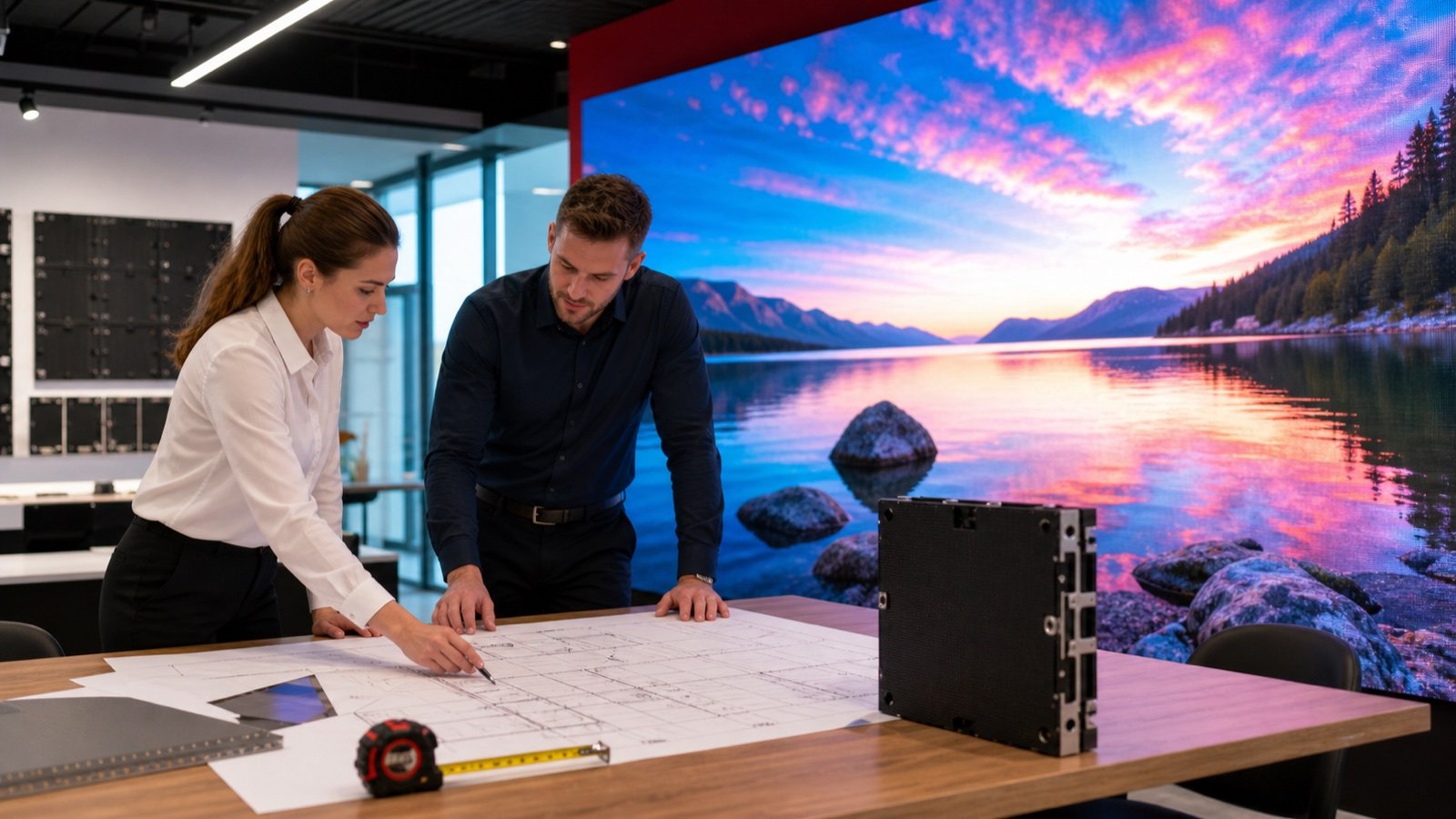
Start with width and height. Not “big,” not “around the size of a wall,” but something like 6 meters wide by 3 meters high. Even a rough number helps a lot.
Screen size affects cabinet quantity, resolution, power consumption, steel structure, packing volume, and shipping cost. If the size is still flexible, tell the supplier the available wall size or stage opening. A good supplier can suggest a practical screen ratio based on standard cabinet sizes.
2. Where will people stand when they watch it?
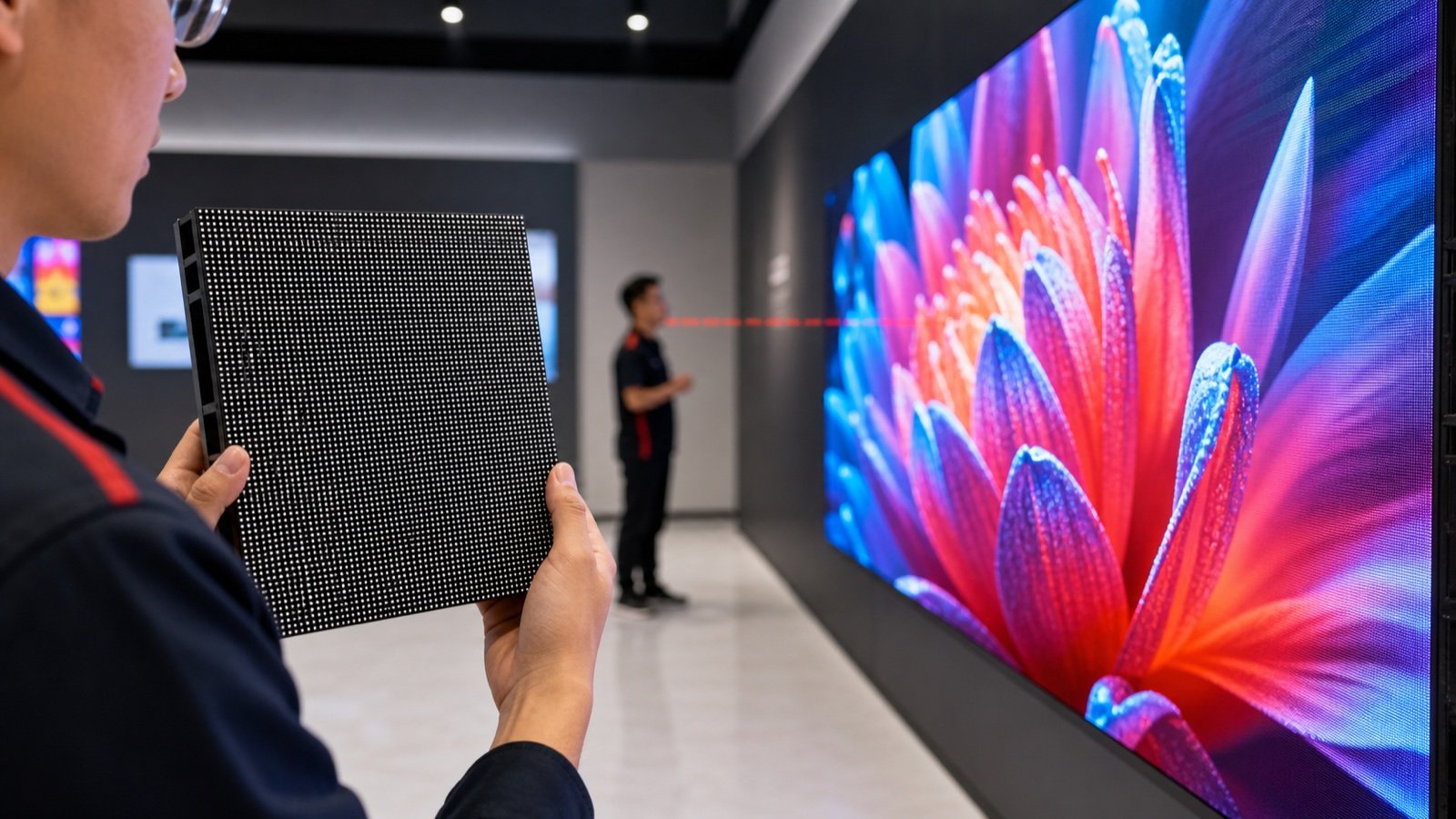
This is one of the most important questions. A screen viewed from 2 meters away needs a different pixel pitch from a billboard viewed from 30 meters away.
If viewers are close, you usually need a finer pixel pitch. If viewers are far away, a larger pixel pitch can still look good and save budget. Do not choose pixel pitch only because it sounds more advanced. Choose it because it fits the real viewing distance.
3. Is the screen indoor or outdoor?
Indoor and outdoor LED displays are not the same thing. Outdoor screens need higher brightness, stronger waterproof protection, better heat control, and a structure that can handle real weather.
For indoor screens, the focus is often image clarity, viewing comfort, refresh rate, silent operation, and a clean installation look. For outdoor screens, you should talk about sunlight, rain, dust, wind, access for service, and how long the screen will run every day.
4. How bright does it need to be?
Brightness is not just a number on a spec sheet. It depends on the environment. A screen facing direct sunlight needs much higher brightness than a screen inside a meeting room.
Too dim, and the content looks weak. Too bright, and indoor viewers may feel uncomfortable. Tell your supplier whether the screen faces windows, outdoor sunlight, stage lighting, or a controlled indoor space.
5. How will the screen be installed?
Wall-mounted, hanging, floor-stacked, pole-mounted, built into a cabinet, installed on a steel frame, or used as a rental screen? Installation method changes the product choice.
A rental LED display usually needs quick locks, lightweight cabinets, protection corners, and flight cases. A fixed LED display needs stable structure, clean cabling, and a maintenance plan. If you are still deciding between the two, this guide may help: Rental LED Display vs Fixed LED Display.
6. Can technicians reach the screen later?
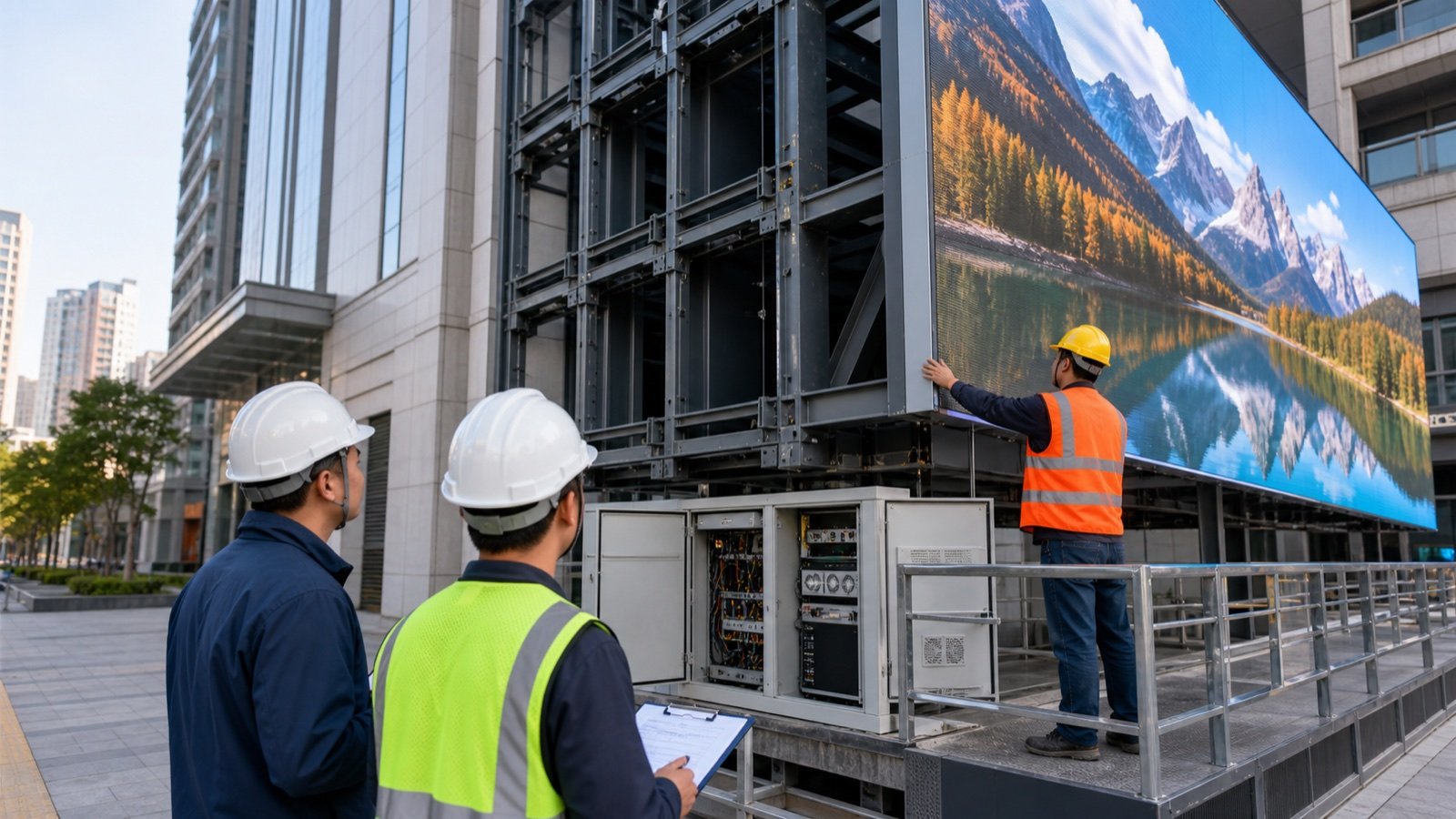
Maintenance access is easy to forget before installation and very annoying to fix afterward. Ask yourself: can someone safely replace a module, power supply, receiving card, or cable later?
If there is no rear access, you may need front service modules. If the screen is high on a building, you need to think about safe maintenance access. If the screen is used for events, you need spare modules and quick replacement parts.
7. What content will play on the screen?
Simple advertising images, live camera feed, video playback, stage visuals, sports scores, menu boards, retail promotion, or meeting room presentation? Different content has different needs.
Fast video and camera feed usually need good refresh rate and stable control. Text-heavy content needs suitable pixel pitch and clean contrast. Outdoor ads need strong brightness and reliable playback. Tell the supplier what you plan to show, not only the screen size.
8. What control system do you prefer?
Some projects need simple USB or network content updates. Others need cloud control, scheduled playback, live video processors, or integration with existing AV systems.
If you do not know the control system yet, that is fine. Just explain how you want to update content: from a laptop, phone app, media player, control room, or remote cloud platform.
9. What is your timeline and delivery plan?
Timeline affects production, testing, packaging, shipping method, and installation planning. A screen needed for an event next month is very different from a permanent billboard planned for next quarter.
Also mention the destination country, delivery address type, and whether you need spare parts, installation drawings, cabinet packing, or inspection photos before shipment.
A quick quote request template
If you want a faster answer, send something like this:
- Screen size: width × height
- Indoor or outdoor use
- Closest and normal viewing distance
- Installation method
- Content type
- Target delivery time
- Country or city for shipping
- Any photos, drawings, or site measurements
With these details, your supplier can recommend a product series, pixel pitch, cabinet structure, estimated resolution, control system, and quotation much more accurately.
Final thought
A good LED display quote is not only about price. It is about choosing a screen that fits the site, content, viewing distance, installation method, and maintenance plan. Spend a few minutes collecting project details first, and you will save a lot of back-and-forth later.
If you are planning a project now, browse our LED display products or contact us with your screen size, usage environment, and target timeline. We can help you narrow down a practical option before you buy.
FAQ
What information should I send for an LED display quote?
Send the screen size, indoor or outdoor use, viewing distance, installation method, content type, destination, and timeline. Photos or drawings are also very helpful.
Do I always need the smallest pixel pitch?
No. Smaller pixel pitch is useful for close viewing, but it also increases cost. For long viewing distance, a larger pitch can still look clear and practical.
Should I choose rental LED or fixed LED?
Choose rental LED if the screen moves often or is used for events. Choose fixed LED if it will stay in one place for a long time, such as a wall, billboard, showroom, or retail space.
How This Guide Was Prepared
This guide was prepared by the Shangxian Display Editorial Team using available product specifications, factory inspection workflows, recurring buyer questions, and practical project-selection requirements.
Final product specifications, certifications, warranty terms, spare-parts quantities, lead times, and installation requirements should be confirmed for the selected model in the project quotation.