
LED Display Fan Noise: Acoustic Planning and Acceptance Guide
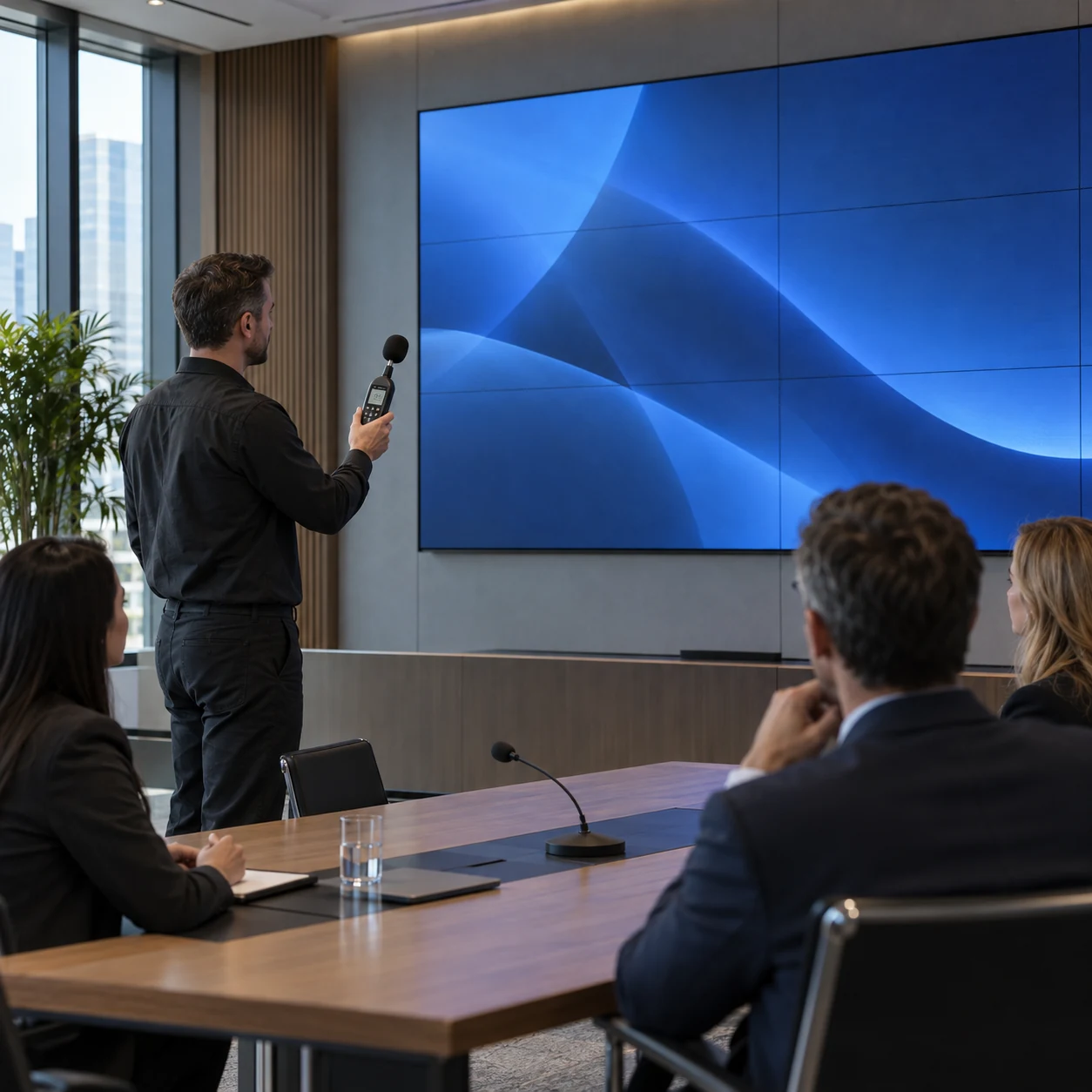
Article Summary
LED display fan noise should be planned as a complete room-and-system requirement. Use this buyer’s guide to define operating modes, measurement conditions, acceptance evidence, and corrective action before handover.
LED display fan noise should be treated as a room-and-system requirement, not as a cabinet feature checked at the end of installation. Buyers planning for LED wall noise should define the operating mode, content and brightness, room conditions, measurement positions, warm-up period, acceptance evidence, and corrective action before the order is placed.
The practical question is not simply “Is the screen fanless?” A fanless LED cabinet can still be installed beside noisy power supplies, processors, rack cooling, or HVAC. A fan-assisted cabinet can also be acceptable when airflow is well designed and the room is not acoustically sensitive. The correct solution depends on the application, thermal load, ambient temperature, duty cycle, service access, and the room’s background sound.
Short answer: specify the acoustic result, not one component
For a useful LED display fan noise requirement, define six items:
- Room use: boardroom, broadcast studio, control room, museum, house of worship, retail space, or another application.
- Operating states: standby, normal content, high brightness, warm operation, and any fail-safe cooling mode.
- System boundary: LED cabinets, power supplies, processor, distribution equipment, rack fans, and associated HVAC.
- Measurement conditions: instrument, room state, background reading, microphone positions, duration, and repeatability.
- Acceptance rule: the agreed result at representative listener or microphone positions, not only beside the cabinet.
- Remedy: adjustment, isolation, component replacement, airflow redesign, re-test, or a documented exception.
For an indoor LED display used near microphones or seated viewers, include acoustics in the RFQ before the cabinet and cooling architecture are selected.
What does “LED display fan noise” include?
LED display fan noise is the audible sound associated with cooling and operating an LED wall system. It may include broadband airflow, tonal fan noise, vibration, electrical buzz, relay chatter, or sound transmitted through the supporting structure.
Common sources are:
- cabinet or module cooling fans;
- power-supply fans and magnetic components;
- video processors, switches, media servers, and control racks;
- room or enclosure HVAC responding to the LED wall’s heat load;
- loose panels, cable covers, trim, or support members that vibrate;
- restricted air paths that force variable-speed fans to run faster;
- contaminated filters, blocked intakes, or poor service clearance.
This system view matters because moving a noisy processor into a nearby rack does not solve the project if that rack is in the same quiet room. Likewise, reducing fan speed without validating temperature can exchange an acoustic complaint for reduced reliability.
Is a fanless LED display always quieter?
Not necessarily. “Fanless” describes part of the cooling design; it does not guarantee a room-level acoustic result. Passive cooling can remove a major moving sound source, but the complete installation may still contain fan-cooled power, processing, network, or air-conditioning equipment.
A fanless design is often attractive for boardrooms, studios, museums, luxury retail, houses of worship, and other spaces where speech or recording quality matters. However, the final choice must account for:
- maximum and typical brightness;
- average content load;
- daily operating hours;
- room temperature and ventilation;
- wall recess or enclosure geometry;
- altitude and airflow derating;
- front- or rear-service access;
- dust accumulation and maintenance;
- component temperature limits.
Projects in hot environments should coordinate the acoustic plan with the hot-climate LED display cooling plan. A solution that is quiet during a short showroom demonstration may behave differently after several hours in a warm enclosure.
Why room use changes the requirement
The same LED wall can be acceptable in a busy lobby and distracting in a recording studio. The room’s use determines who listens, where microphones are placed, how quiet periods occur, and whether tonal sound is more noticeable than general airflow.
| Application | Main acoustic concern | Positions to evaluate |
|---|---|---|
| Corporate boardroom | Speech intelligibility and distraction during quiet discussion | Main seats, presenter position, conferencing microphones |
| Broadcast or virtual studio | Noise captured by microphones and changing fan speed during takes | Talent marks, boom or desk microphones, camera-side positions |
| Control room | Continuous operator exposure and tonal sound in a quiet workspace | Primary consoles and supervisor positions |
| Museum or gallery | Low ambient sound and visitor proximity | Nearest visitor route and exhibit listening points |
| House of worship | Spoken-word and music recording | Lectern, stage, choir, and recording microphone positions |
| Retail or transport venue | Noise may be masked, but vibration or maintenance issues remain | Nearest customer zone and adjacent occupied space |
Do not copy a noise limit from another project without checking its room volume, finishes, HVAC, operating state, measurement method, and microphone distance. If the contract requires a numeric limit, involve a qualified acoustic consultant so the criterion and method are unambiguous.
What buyers should put in the RFQ
An RFQ should give the supplier enough context to propose a credible cooling and acoustic solution. Include:
- active screen dimensions, resolution, cabinet layout, and mounting method;
- normal and maximum brightness presets;
- expected content profile and operating schedule;
- room temperature range and ventilation concept;
- recess, cladding, wall cavity, and service-access drawings;
- locations of racks, processors, and power distribution;
- important seats, workstations, stages, and microphone positions;
- any project-specific sound criterion and who owns the measurement;
- required operating states for factory and site testing;
- evidence required with the submittal, such as component data, airflow direction, thermal assumptions, and test records.
Ask the supplier to identify which components contain fans, how fan speed is controlled, what happens under a temperature alarm, and whether acoustic behavior changes between normal and emergency modes. Also request the planned service clearances. Airflow restrictions introduced by decorative trim or a shallow recess can invalidate a quiet demonstration made with an open cabinet.
How to run a repeatable acoustic acceptance test
The test method should be agreed before commissioning. General sound-measurement guidance from NIOSH recommends taking measurements during the typical operating situation, using consistent positions, checking instrument settings, and keeping detailed records. ISO 1996-2 describes methods for determining sound pressure levels in environmental-noise assessment. These references provide measurement principles; the project team must define the applicable contractual method for the room.
Use the following sequence:
- Document the room state. Record doors, occupancy, HVAC condition, nearby equipment, and any temporary construction noise.
- Measure the background. Capture the room without the LED system operating so the result can be interpreted in context.
- Stabilize the system. Run the agreed content and brightness long enough for cabinet, power, rack, and HVAC cooling behavior to settle.
- Test defined modes. Include standby, typical content, agreed normal brightness, and any high-load or fail-safe state required by the contract.
- Use fixed positions. Measure at the approved seats, workstations, presenter marks, and microphone locations. Record distance and height.
- Log settings and events. Note brightness preset, content, ambient temperature, fan mode, instrument configuration, duration, and any speed changes or tonal events.
- Repeat abnormal results. Confirm that the sound comes from the LED system and not a temporary source before corrective work begins.
| Test field | Minimum record |
|---|---|
| System state | Off/background, standby, normal, high-load, or fail-safe |
| Visual load | Test pattern or representative content, source path, brightness preset |
| Thermal state | Warm-up duration, room temperature, ventilation and enclosure condition |
| Measurement point | Named room position, distance, height, and orientation |
| Instrument | Meter class or project-approved device, settings, calibration record if required |
| Result | Level or observation, time history where useful, tonal or vibration notes |
| Evidence | Room plan, photos, settings export, issue location, and retest record |
Phone applications can help with early comparison, but they should not automatically replace the project’s specified instrument and method. For contractual acceptance, use the equipment and procedure agreed by the project team.
How to diagnose an acoustic complaint
Start by locating the source, not by reducing every fan speed. A disciplined check avoids unsafe or temporary fixes.
- Reproduce the complaint in the same content, brightness, temperature, and room state.
- Compare the background, LED-off, processor-only, rack-only, and full-system conditions where safe and practical.
- Listen and measure at both the complaint position and near likely sources.
- Check whether the sound changes with brightness, image load, temperature, or time.
- Inspect airflow restrictions, dirty filters, loose covers, cable contact, trim, and structure-borne vibration.
- Review temperature and fan-speed logs if remote monitoring exposes them.
- Apply one controlled change, then repeat the same test.
If the sound is tonal or intermittent, a single averaged number may not explain why people notice it. Record the character and timing of the sound in addition to the level. A trained acoustic engineer can perform frequency analysis when the contractual result or diagnosis requires it.
Corrective actions that preserve cooling reliability
Possible remedies depend on the identified path:
- replace a damaged, unbalanced, or incorrectly controlled fan;
- remove an airflow obstruction and restore the designed service clearance;
- isolate vibrating racks, panels, trim, or support members;
- move noisy auxiliary equipment to a suitable technical space;
- use manufacturer-approved fan-control or firmware settings;
- revise rack ventilation or room HVAC operation;
- add acoustic treatment that does not block intakes, exhausts, service access, or fire requirements;
- correct an overly bright operating preset through LED display brightness scheduling;
- re-evaluate thermal load with the LED display power-consumption plan.
Never disconnect fans, obstruct vents, or force a lower cooling mode without the manufacturer’s approval and thermal validation. A quiet system must remain electrically safe, thermally stable, and maintainable.
Who owns each part of the result?
| Party | Typical responsibility |
|---|---|
| Buyer or consultant | Define room use, acoustic criterion, important positions, evidence, and acceptance authority |
| LED manufacturer | Declare cooling architecture, component behavior, operating limits, and approved adjustments |
| Integrator | Coordinate cabinets, processors, racks, mounting, configuration, and commissioning evidence |
| Architect or contractor | Provide enclosure geometry, service access, finishes, and vibration-control details |
| Mechanical engineer | Account for heat load, supply and return air, HVAC noise, and room operating conditions |
| Acoustic consultant | Define or validate the numeric criterion and measurement method where required |
| Operator | Use approved brightness and thermal presets and maintain filters, vents, and logs |
The acceptance owner should be named in the purchase documents. Otherwise, the manufacturer may test cabinet noise at the factory while the end user judges the completed room, and both parties may believe they met different requirements.
Buyer checklist before approval
- Is the intended room use stated?
- Are quiet seats and microphone positions marked on a plan?
- Does the equipment list identify every fan-cooled component?
- Are typical and maximum brightness states defined?
- Are ambient temperature, enclosure, and HVAC assumptions documented?
- Is there an agreed background measurement?
- Are warm-up time and test content repeatable?
- Is the system boundary clear?
- Does the criterion apply at relevant listener positions?
- Is the instrument and measurement owner identified?
- Are emergency or fail-safe fan modes included?
- Are corrective action and re-test responsibilities written?
This checklist should be included in the LED display commissioning plan and closed before handover.
Frequently asked questions
What is an acceptable LED display noise level?
There is no single universal number for every LED display. The acceptable result depends on room use, existing background sound, listener and microphone positions, operating mode, and the agreed measurement method. A studio, boardroom, and transport hall need different criteria.
Can LED display brightness affect fan noise?
It can. Higher brightness and demanding content can increase power and heat, which may change variable-speed fan or HVAC operation. The relationship is product- and installation-specific, so test the agreed brightness presets after thermal stabilization.
Is a fanless LED wall silent?
Not automatically. Passive cabinets remove one potential source, but power supplies, processors, control racks, HVAC, vibration, and electrical components may still be audible. Evaluate the complete installed system.
Should noise be tested at the factory or on site?
Both can be useful. Factory testing checks the supplied equipment under controlled conditions. Site testing verifies the completed room, enclosure, rack, HVAC, and mounting system. Contractual acceptance should state which stage controls the final decision.
Can acoustic foam be placed behind the LED wall?
Only after the project team confirms fire performance, airflow, heat, service access, dust, and manufacturer requirements. Acoustic material must not obstruct ventilation or create a maintenance or safety problem.
Final recommendation
The most reliable way to control LED display fan noise is to convert “quiet” into a project-specific, repeatable requirement. Define the room, the complete equipment boundary, operating modes, measurement positions, thermal state, evidence, and remedy before purchasing. Then verify the complete installation under realistic conditions.
If you are planning a quiet-room LED wall, send the screen size, room use, brightness target, enclosure drawing, operating hours, ambient temperature, rack location, and microphone or audience positions with the inquiry. That information allows the manufacturer and integrator to propose a cooling strategy that can be tested instead of a vague promise that cannot be accepted objectively.
Sources
How This Guide Was Prepared
This guide was prepared by the Shangxian Display Editorial Team using available product specifications, factory inspection workflows, recurring buyer questions, and practical project-selection requirements.
Final product specifications, certifications, warranty terms, spare-parts quantities, lead times, and installation requirements should be confirmed for the selected model in the project quotation.